
Visualizing Fluids Motions
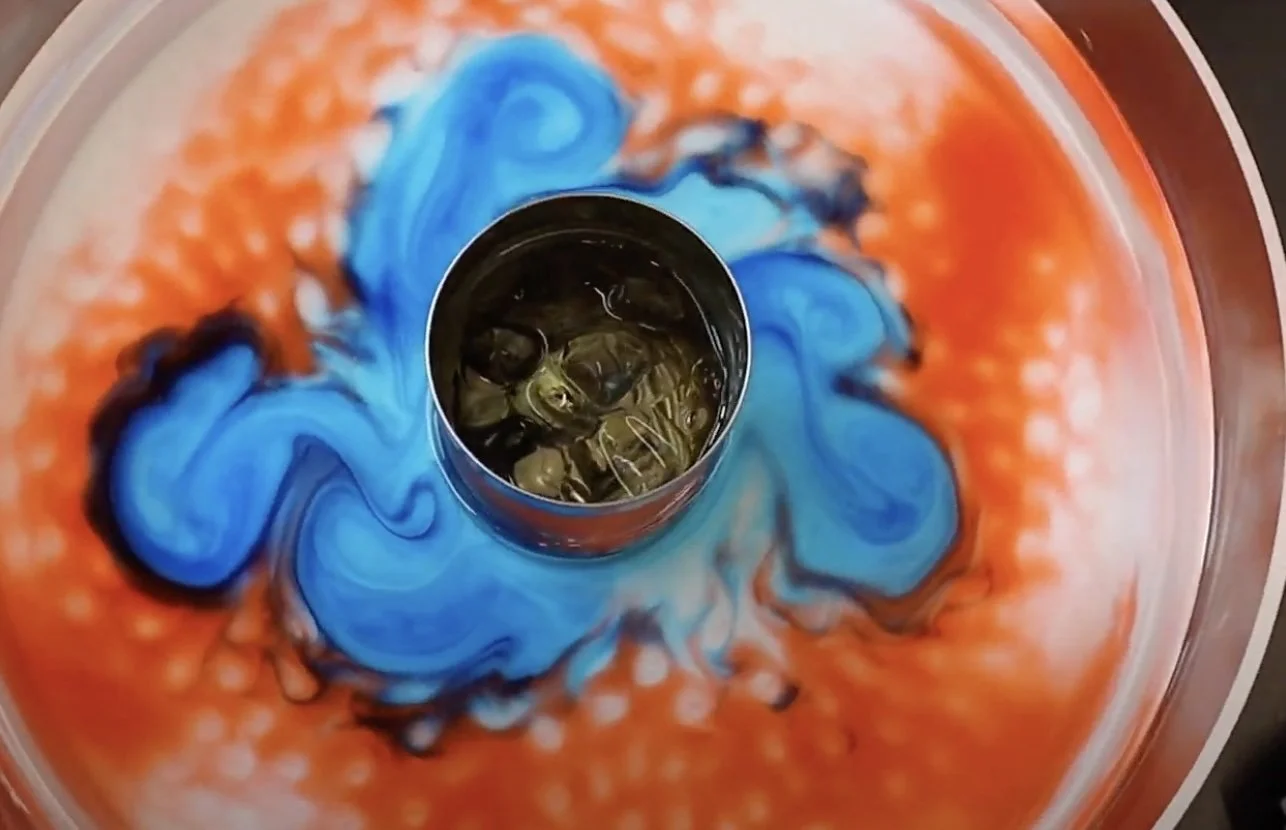
The DIYnamics Kits model the fluid dynamics of Earth’s (and other planet’s) atmospheres, oceans and interiors. Fluid motions in the tank capture the fundamental behavior of planetary systems. A key step in performing experiments is observing fluid flows to relate structures in the model with the real world. There are multiple solutions for visualizing fluid motions!
Option 1: Food Coloring
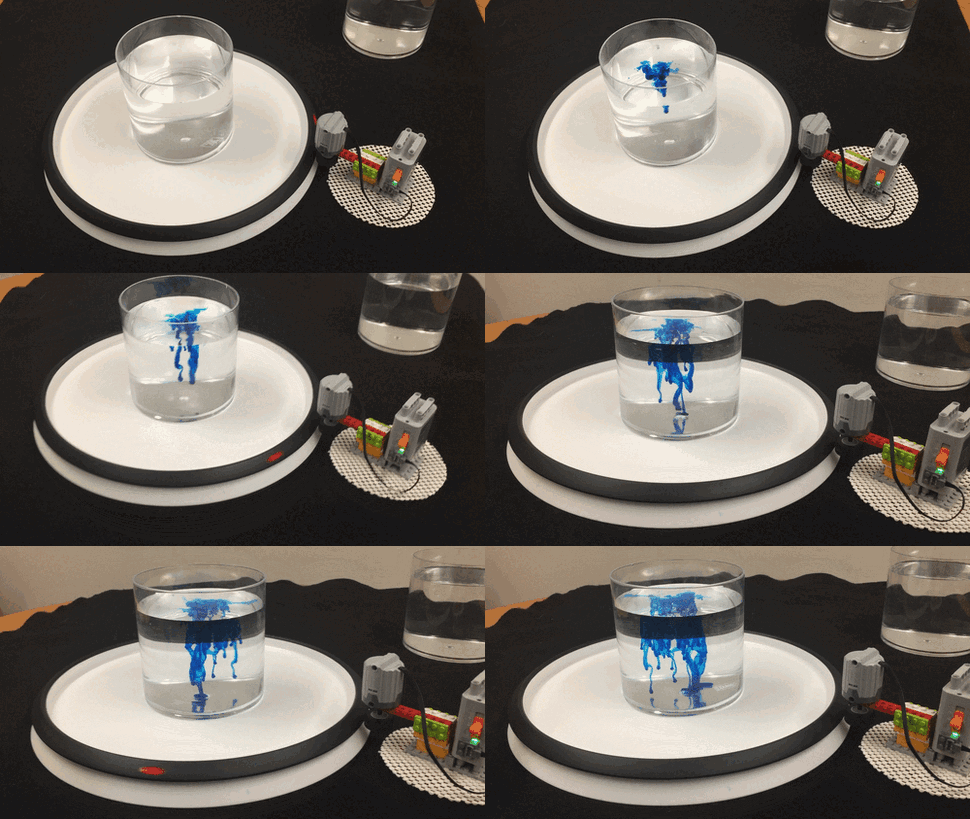
Rotating column experiment with food coloring. Notice how the food coloring tracks each tendril of the fluid flows and provides a 3D view of structures.
Food coloring is the go-to option for visualizing fluid motions. Observing the progression of dye through water provides an intuitive glimpse into fluid flows. Note that marked and unmarked fluid are both subject to the fluid dynamics of the system — the dye merely allows us to track the fluid with our naked eye. A benefit of food coloring is that its semitransparent nature provides a 3D view of structures. Furthermore, using a variety of colors can help illustrate the interaction between different regions of the fluid layer. Tips for working with food coloring includes adding surfactant to the water and avoiding excess — the dye works best when there is contrast. Food coloring is a precise and straightforward solution perfect for the majority of experiments!
Option 2: Barbasoloscope
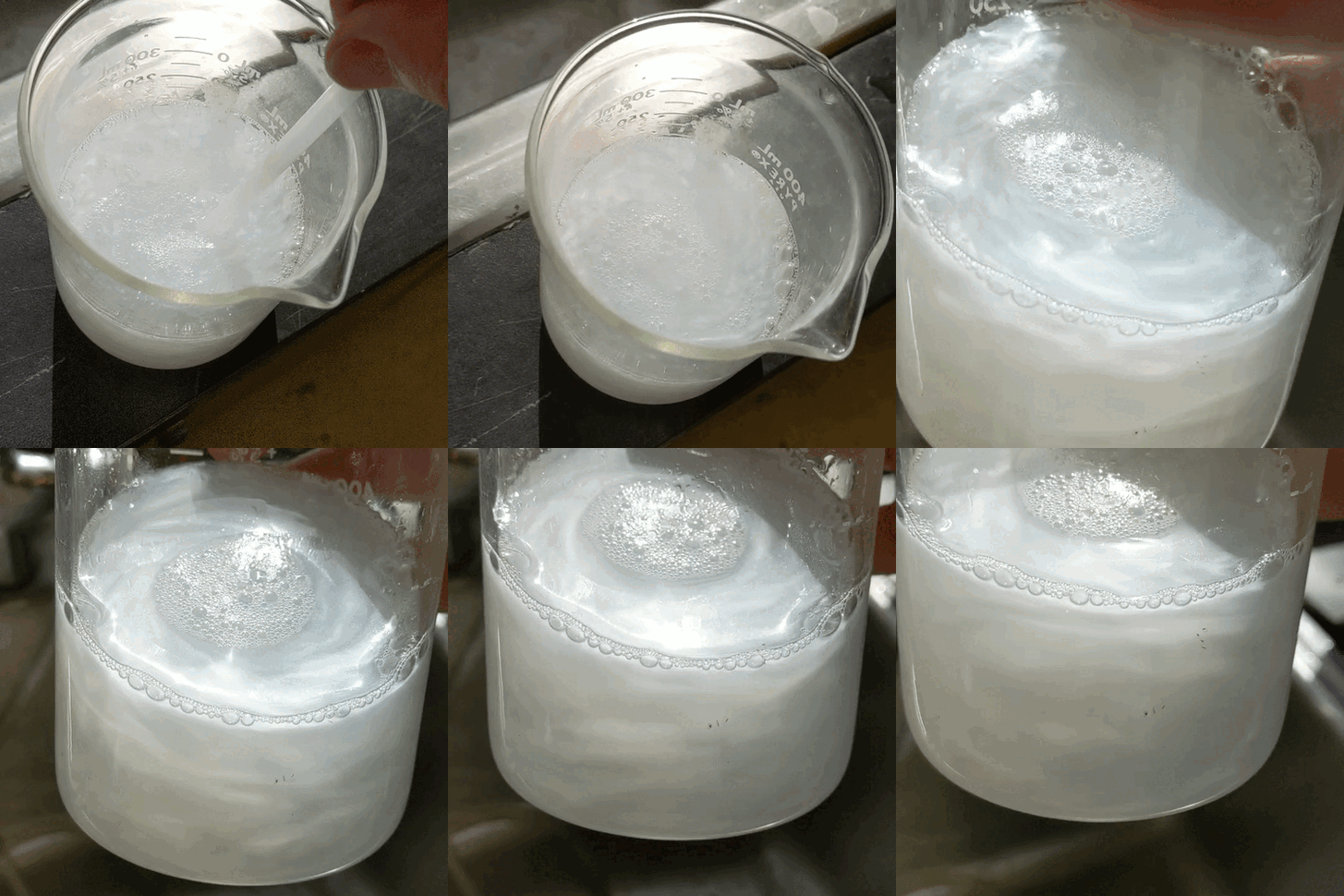
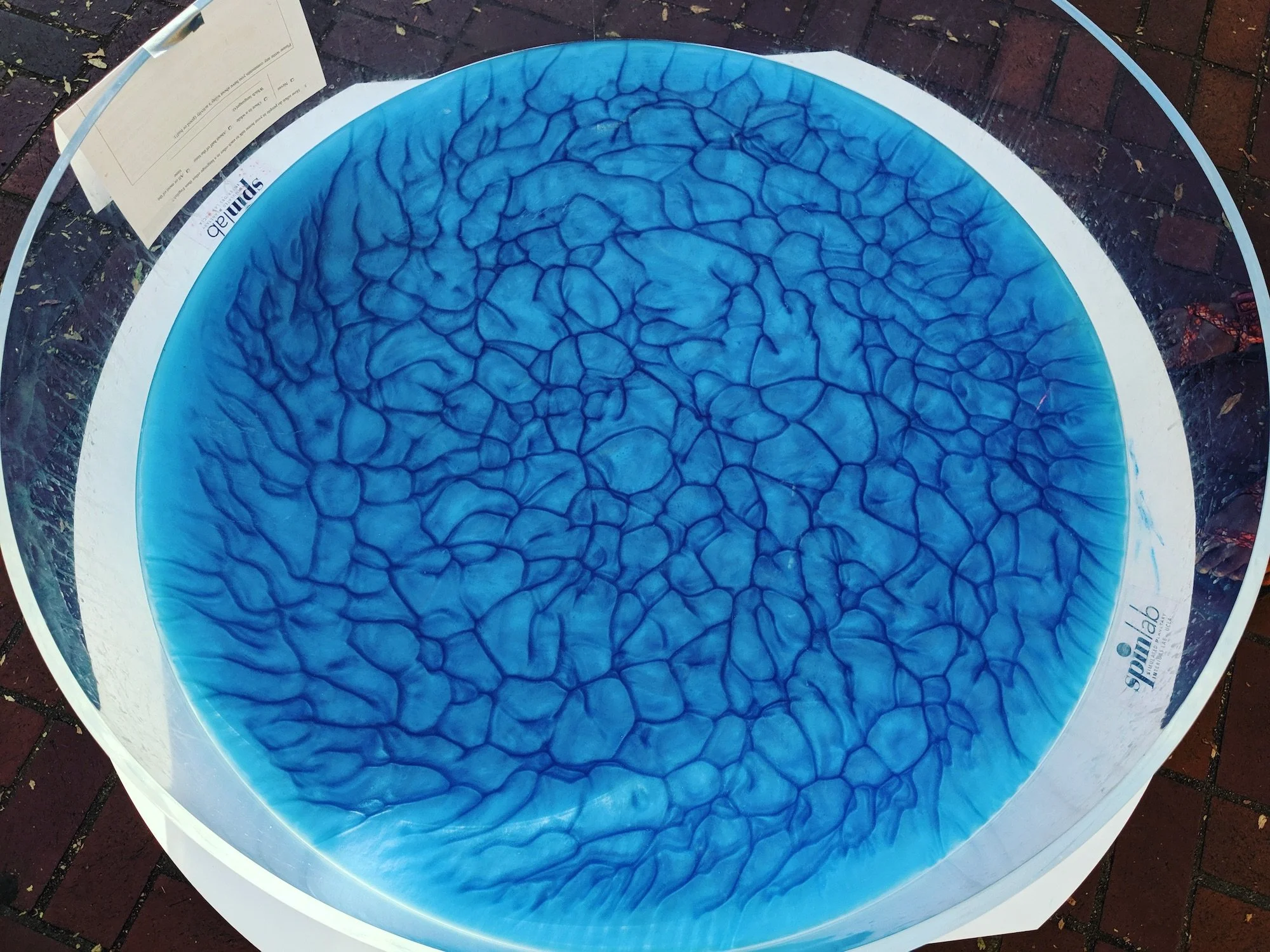
(L) Stirring Barbasoloscope. The rheoscopic fluid is produced by mixing water and shaving cream. Stearic acid crystals in suspension mark fluid flows. Notice the bubbles at the surface — an oily film rises atop the solution after agitation. Utilize a paper towel to skim off the oily and bubbly layer. (R) Non-rotating convection experiment with Barbasoloscope. Cells of overturning hot and cold water can be observed in stunning detail. Barbasoloscope provides both a complete yet incomplete perspective in different respects — all fluid motions are visible only for a 2D view of the surface. Here is a video of Barbasoloscope in action!
Rheoscopic fluid refers to a fluid containing microscopic reflective crystals in suspension. The crystals align themselves with fluid motions and reflect light thus highlighting fluid flows. The crystals are analogous to bioluminescent algae in the oceans. Rheoscopic fluid is ideal for experiments such as convection because it marks currents at fine scales. However, rheoscopic fluid is opaque and thus, structures are only visible from the surface — a 2D view. Although commercially prepared rheoscopic fluids are available, a safe and fun Do-It-Yourself rheoscopic fluid can be made by mixing water and shaving cream as highlighted in Rheoscopic fluids in a post-Kalliroscope world by Borrero-Echeverry et al. (2018). Termed Barbasoloscope, the solution provides a stunning visualization of fluid motions!
An unwanted byproduct formed when making Barbasoloscope is an oily and bubbly film (see above) that floats atop the rheoscopic fluid and obscures fluid motions beneath. Note that the video tutorial above omits steps for removing the film. Use paper towels to skim off the film. This step must be performed not only after the initial preparation but also after pouring Barbasoloscope into a tank for experiments — the pouring agitates the solutions creating bubbles.
Option 3: Particles
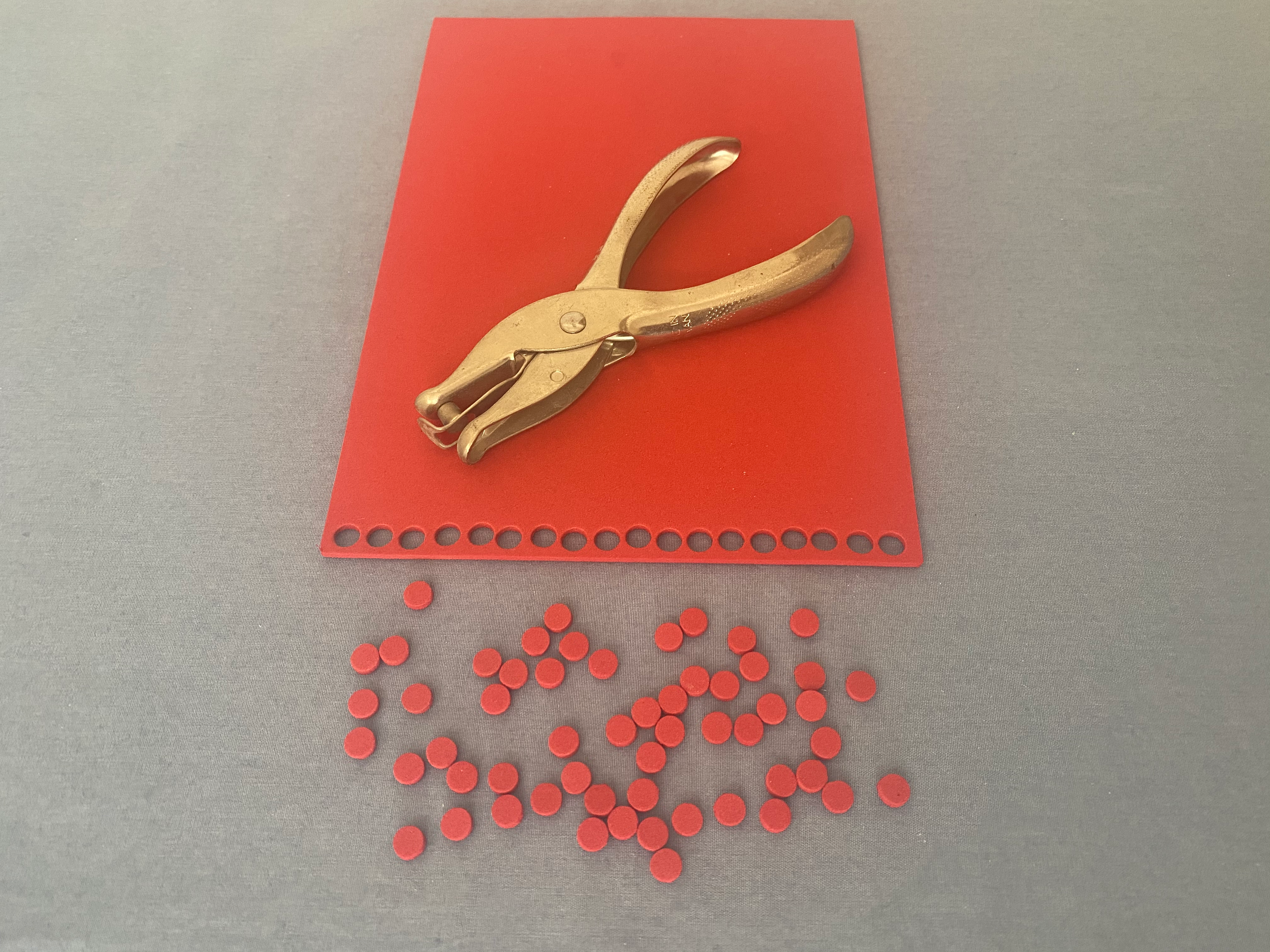
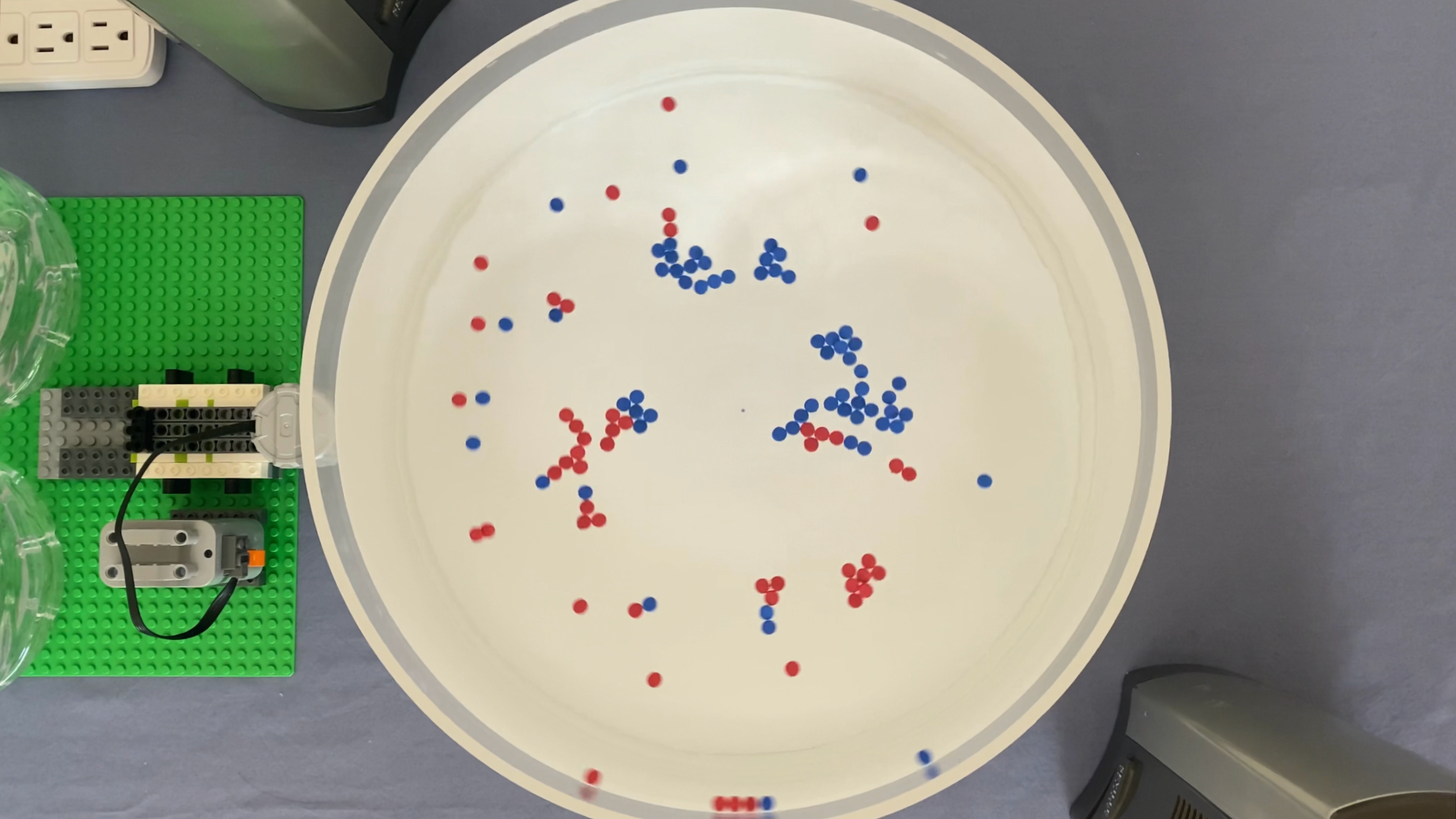
(L) Hole punches of foam sheets serve as excellent floating particles. The foam dots summarize fluid flows at the surface of a fluid layer. (R) Great Pacific garback patch experiment with foam dots. The hole punches of foam sheets represent plastic waste floating in the Pacific Ocean. Air blown from fans in the model represent currents in the real world that gather debris into large groups with significant detrimental effects for the biosphere. Here is a video of particles in action!
Food coloring and rheoscopic fluid highlight fluid flows by marking the fluid itself. This provides a detailed perspective on every twist and turn currents take. Particles highlight fluid flows by being carried along with the fluid. This provides a broad perspective on the dominant direction of currents. The particles are analogous to plastic waste in the oceans. A benefit of particles is that their paths summarize fluid motions in the system and provide discrete data points for analysis. Floating and sinking particles can be used to illustrate fluid motions at the surface and floor of a fluid layer respectively. Floating particles can be made by taking hole punches of foam sheets and sinking particles include chia seeds. Particles provide an intuitive and pertinent marker for fluid flows!
Recommended Parts - Food Coloring - Barbasol - Foam Sheets - Chia Seeds