

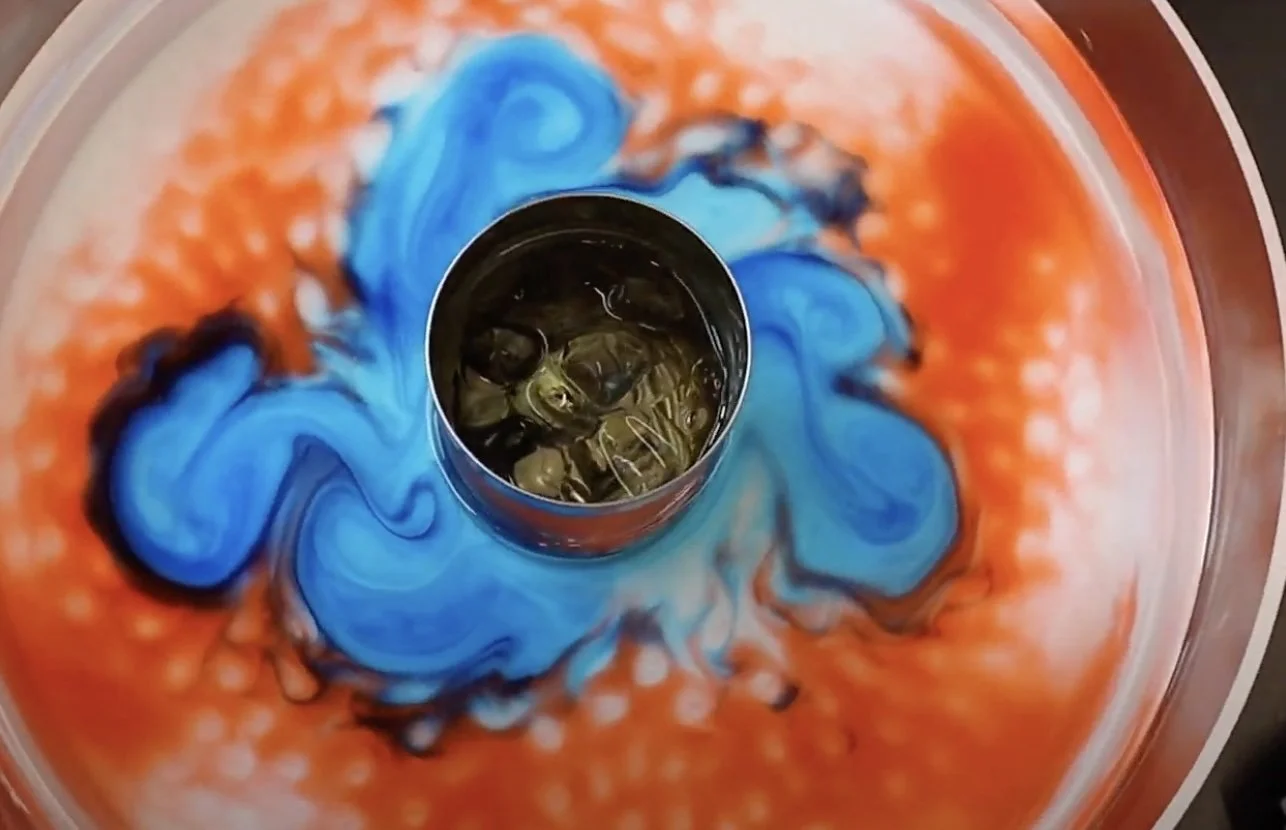
Establishing Solid Body Rotation
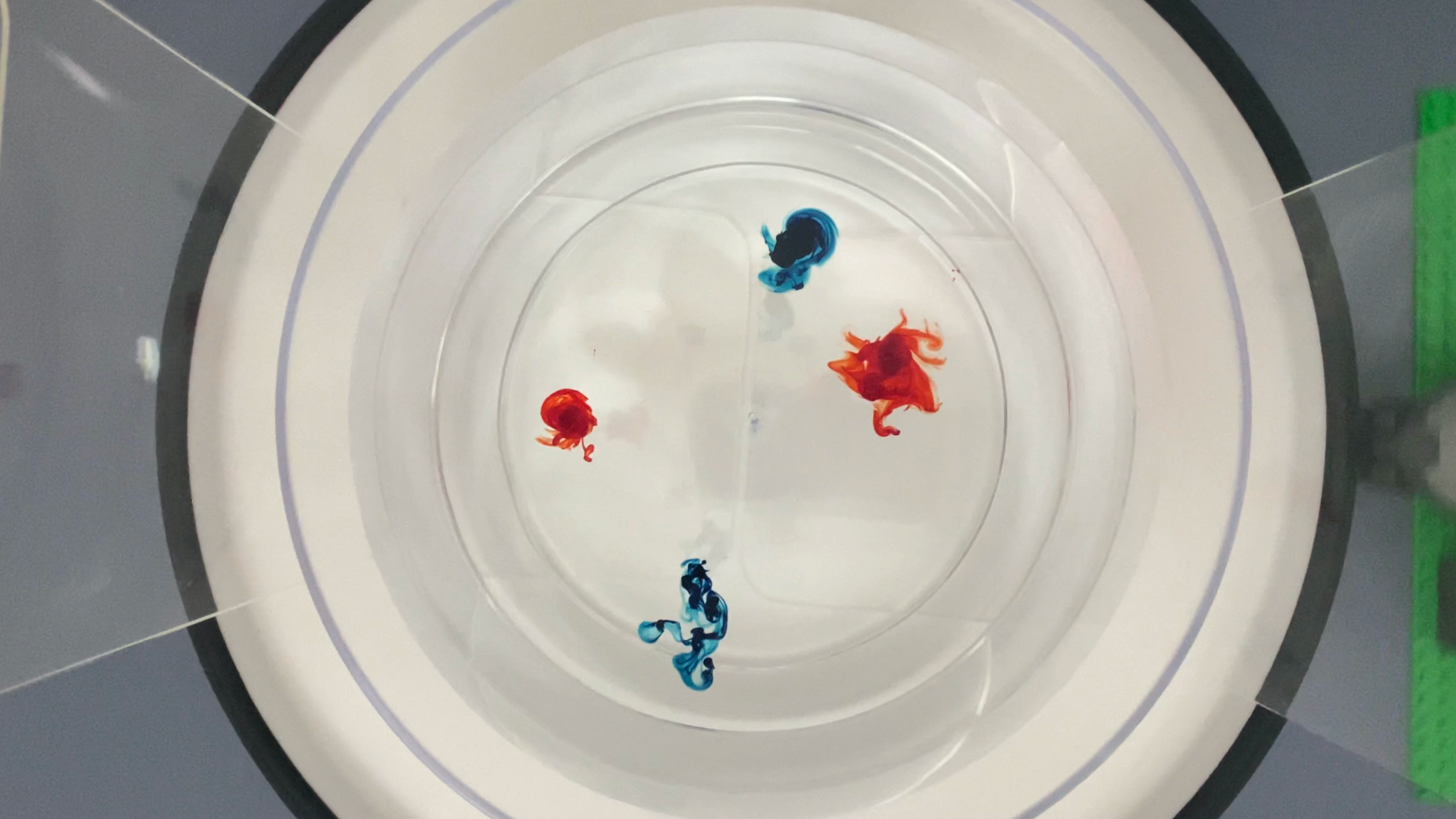
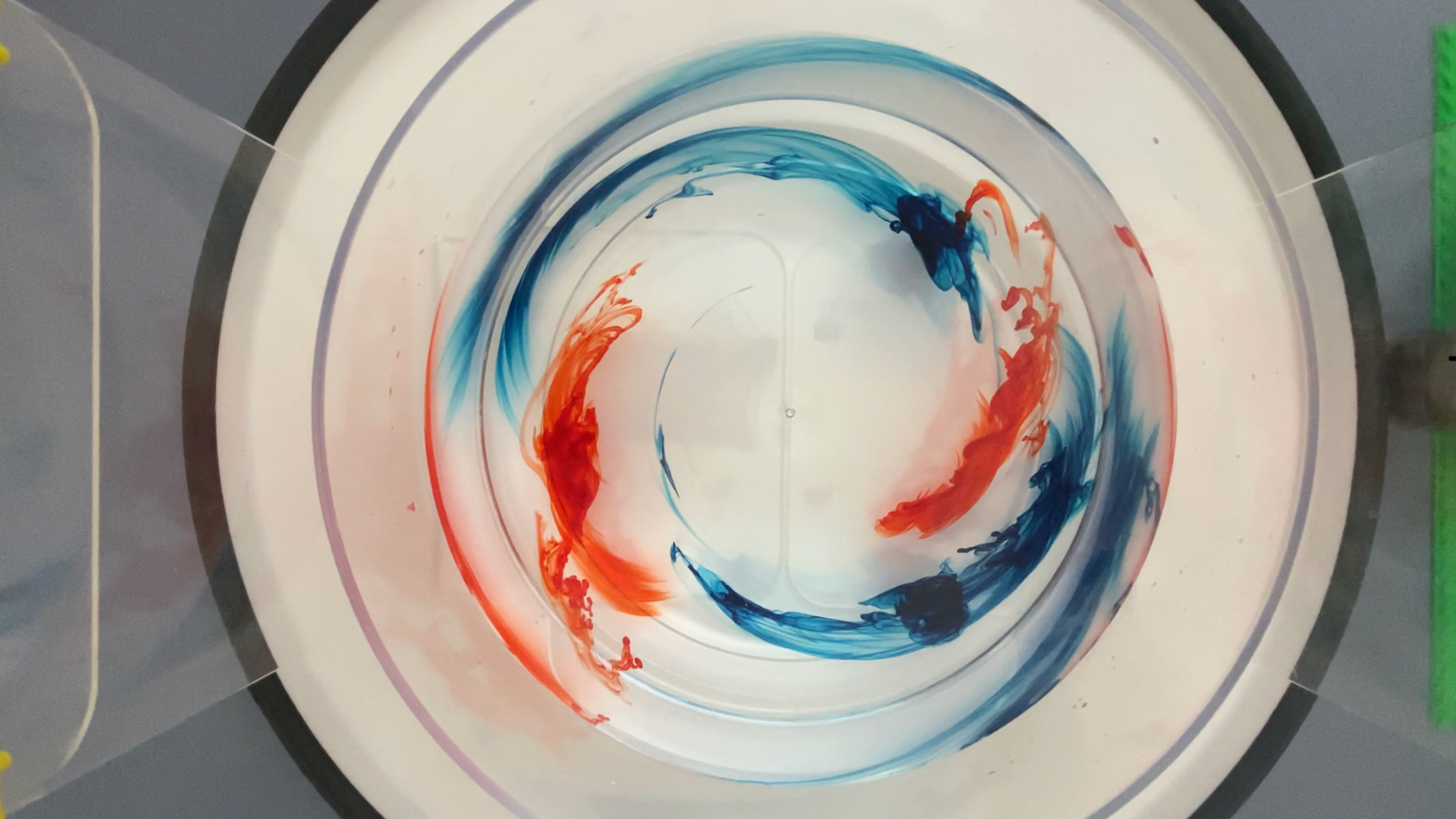
Fluid layer in (L) and not in (R) a state of solid body rotation (colloquially referred to as spun up) or rotating in sync with the system. When spun up, the fluid layer and system feature the same velocity and thus, the dye does not move. Meanwhile, if not spun up, the fluid layer is slower relative to the system and thus, the dye is dragged along.
Rotating tank platforms model the real world by capturing the fundamental impact of a planet’s rotation on its fluid bodies. Specifically, the planet’s rotation establishes a state of solid body rotation in its fluid bodies. Thus, experiments are predicated on the rotating tank platform being similarly spun up.
Solid body rotation refers to a fluid layer rotating at the same velocity as its system. This can include the Earth’s oceans rotating in sync with the planet or a tank of water rotating in sync with its turntable. At rest, the fluid layer and the system feature a velocity of zero. Upon commencing rotation, the system quickly reaches its rate. However, the fluid layer initially does not match the velocity of the system. As the system continues to rotate, the fluid layer is pulled by friction to the same rate starting from the boundaries inwards. Eventually, the fluid layer reaches solid body rotation with the system.
The DIYnamics Kits generally require several minutes to establish a state of solid body rotation — the length of time required increases with size of tank and decreases with rotation rate. You can test whether the fluid layer is spun up by adding a drop of food coloring. If the dye remains in place, the water is in a state of solid body rotation — the fluid layer and the system feature the same velocity resulting in no movement. Meanwhile, if the dye expands contrary to the rotation direction, the water has not reached a state of solid body rotation — the system is faster than the fluid layer resulting in the the prior dragging the latter along.